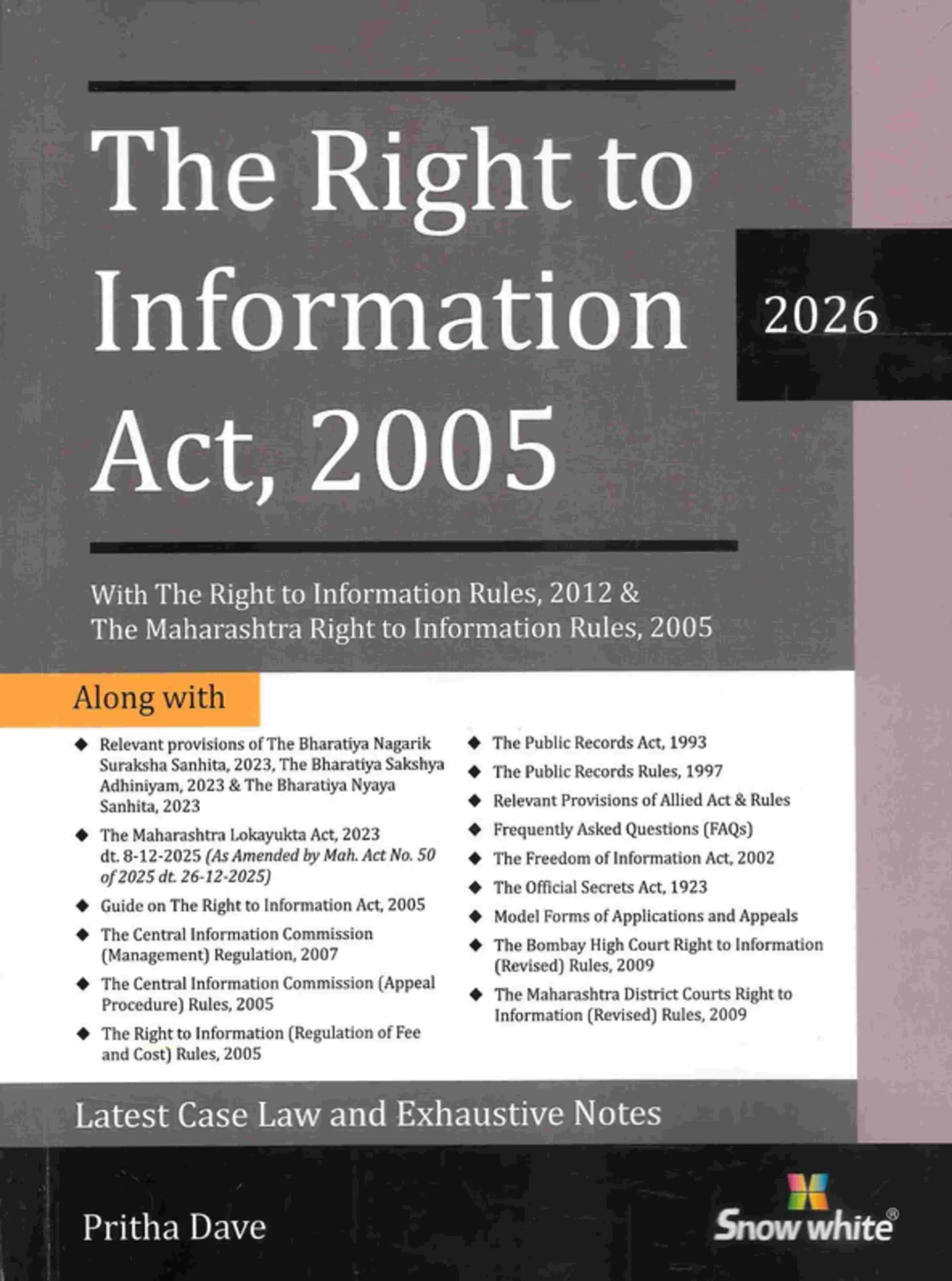
This practical companion to The Right to Information Act, 2005 translates legal principles into tools citizens and officials can use immediately. The book starts with scope and definitions — public authority, information, third-party, exemption clauses — and explains filing formats, jurisdictional rules and online/physical submission routes. Step-by-step chapters cover tactical question design (to avoid rejection), timelines and deemed refusal, fees and fee waivers, grounds of exemption under Sections 8–9, and how to frame strong public-interest arguments to overcome exemptions. Detailed procedural guides explain First Appeal and Second Appeal before the Central/State Information Commissions, injunctions, penalties under Section 20, and enforcement of Commission orders. The manual supplies ready-to-use RTI applications for common public interest topics (procurement, lands, health, education), sample First Appeal and Second Appeal templates, Section 4(1)(b) proactive disclosure checklists for PAs, and a trouble-shooting flowchart for contested cases. A chapter on strategic litigation covers case selection, evidence preservation and media use. Whether you are an activist, journalist, municipal officer or lawyer, this book reduces the friction of information access and empowers users to secure timely, useful disclosures while helping public authorities meet compliance obligations.






Reviews
There are no reviews yet.