

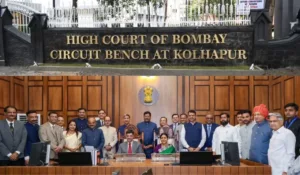
The inauguration of the Bombay High Court's circuit bench in Kolhapur is a landmark step for judicial access in western Maharashtra and neighboring states. Residents of six districts now benefit from local hearings, eliminating the need to travel hundreds of kilometers to Mumbai.
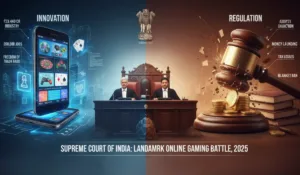
The Supreme Court of India has transferred all pending High Court petitions challenging the Promotion and Regulation of Online Gaming Act, 2025 to itself, setting the stage for a unified constitutional review of the country's most comprehensive gaming legislation. On September 8, 2025, a bench comprising Justices J.B. Pardiwala and K.V. Viswanathan consolidated cases from Karnataka, Delhi, and Madhya Pradesh High Courts, ensuring a definitive ruling on the law's constitutional validity. This landmark case will determine the future of India's ₹23,440 crore online gaming industry and affect millions of users while addressing critical concerns about addiction, money laundering, and constitutional rights.
Gujarat has made a groundbreaking move by passing the Gujarat Jan Vishwas (Amendment of Provisions) Bill 2025, decriminalizing 516 minor offences across 11 laws under six state departments. This transformative legislation replaces imprisonment and criminal penalties with monetary fines for technical violations, marking a paradigm shift from punitive to trust-based governance. The bill directly addresses filing delays, license renewals, unauthorized construction, and minor safety violations that previously carried the threat of criminal prosecution.
Industries Minister Balvantsinh Rajput emphasized that this reform will particularly benefit MSMEs and startups by removing the fear of criminal litigation for minor lapses. The legislation follows the Central Government's Jan Vishwas Act 2.0 framework, under which over 40,000 compliances have been eliminated nationwide. Gujarat now leads states in the number of decriminalized provisions, reinforcing its position as India's premier business destination.
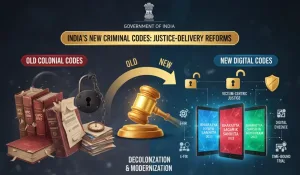
India’s criminal justice system has entered a new era with the introduction of the Bharatiya Nyaya Sanhita (BNS), Bharatiya Nagarik Suraksha Sanhita (BNSS), and Bharatiya Sakshya Adhiniyam (BSA). These laws replace colonial-era codes, aiming to make justice more digital, citizen-focused, and time-bound — but will modernization come at the cost of civil liberties?
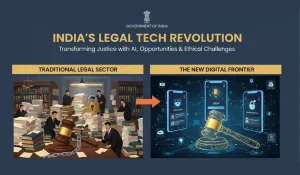
Discover how AI and legal-tech are reshaping the legal profession in India—from research and drafting, to access to justice. Learn the opportunities, the risks, and how law firms can prepare for the future.