


- Advocate Office Essentials
- Advocates Shop
- Apparels - Judges, Sr. Counsel and Lawyers
- Apparels - Judges,Sr. Counsel and Lawyers
- Artifacts / Gift Items
- Bare Acts - Central
- Bare Acts - State
- Commentaries
- Administrative Law
- Arbitration
- Banking Law
- Bankruptcy & Insolvency
- Biographies
- Child Advocacy & POCSO
- Civil Law
- Company Law
- Constitutional Law
- Consumer Law
- Contract Law
- Corporate Law
- Court Rules
- Criminal Law
- Cyber Law
- Drafting, Pleading and Conveyancing
- Family Law
- Intellectual Property
- Labour & Service Law
- Medical Law
- Motor Vehicles Law
- Others
- Shipping & Maritime Law
- Tax Laws
- Decor
- Dictionaries
- Digest
- Exclusive Collection
- International Books
- Journals
- Regional
- Software
- Students Corner
- Trophies
- Uncategorized
No products in the cart.

Arbitration Law A Systematic Approach
₹600.00 Original price was: ₹600.00.₹480.00Current price is: ₹480.00.
This book presents arbitration law in a structured and analytical manner, explaining core concepts and statutory provisions with clarity. It covers arbitration procedure, role of arbitral tribunals, and enforcement of awards under Indian law. The book bridges theory and practice by integrating legal principles with judicial interpretation.
In stock
| Authors of Books | Vaibhav Niti |
|---|
Must have in your Library


Arbitration Law: A Systematic Approach offers a well-organized and analytical treatment of arbitration as a mode of dispute resolution under Indian law. The book explains the evolution, objectives, and scope of arbitration while presenting statutory provisions in a logical and easy-to-follow sequence. It provides a detailed understanding of arbitration agreements, appointment and authority of arbitrators, jurisdiction of arbitral tribunals, and conduct of arbitral proceedings.
Key procedural aspects such as interim measures, evidentiary standards, and time limits are discussed alongside judicial interpretations that shape arbitration practice. The book also examines the enforcement and setting aside of arbitral awards, highlighting the limited role of courts and the principle of party autonomy. Domestic arbitration and international commercial arbitration are addressed to offer a complete view of arbitration law.
By adopting a systematic approach, the book enables readers to grasp both conceptual foundations and practical implications of arbitration. It serves as an academic text for students and a practical reference for professionals handling arbitration matters. Its structured presentation ensures clarity, consistency, and ease of application in real-world dispute resolution.
| Authors of Books | Vaibhav Niti |
|---|
Featured Products
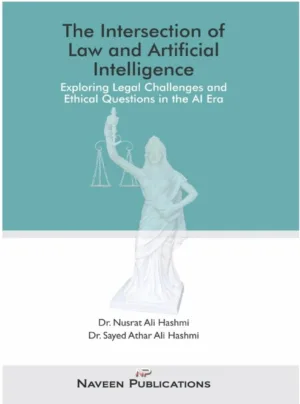
The Intersection of Law and Artificial Intelligence
🔥 7 items sold in last 7 days

Important Civil Acts covering 15 Acts
🔥 2 items sold in last 7 days
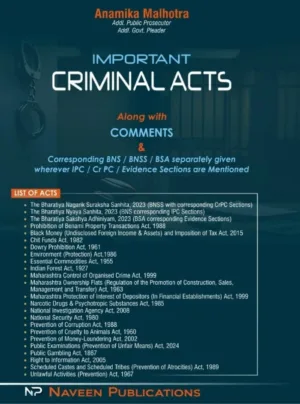
Important Criminal Acts covering 25 Acts
🔥 3 items sold in last 7 days

Criminology & Penology
🔥 2 items sold in last 7 days
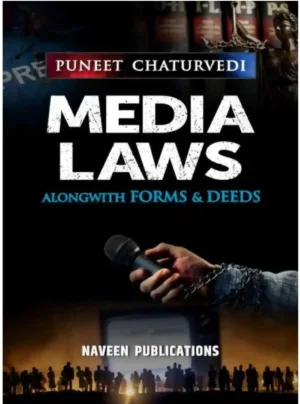
Media Laws
🔥 5 items sold in last 7 days
Reviews
There are no reviews yet.